

Introduction
Navigating the transformative landscape of education in 2026
In 2026, educational leaders like you are navigating a landscape of unprecedented complexity. You might find yourself grappling with declining student retention, an overwhelmed administrative staff, tight budget constraints, and immense pressure to innovate. This confluence of challenges can often feel like a chaotic environment, making strategic planning incredibly difficult.
Picture fragmented systems that don’t communicate, educators drowning in repetitive administrative tasks, and students whose individual learning needs fall through the cracks. Decision-makers often lack the clear, real-time data needed for effective strategic planning, further exacerbating this sense of chaos. The promise of AI in education offers a powerful antidote.
This guide is designed to cut through the noise, offering a pragmatic, ROI-driven roadmap for education decision-makers, even those with limited prior AI knowledge. We promise clarity, measurable outcomes, operational efficiency, and future-proof learning environments. You’ll gain insights into measuring AI’s ROI, enabling personalized learning, and developing strategic implementation roadmaps for your institution.
At Konvergense, we bring over 18 years of experience in digital transformation, partnering with Fortune 500 companies and high-growth startups to implement AI-powered solutions. Our track record in building intelligent chatbots, CRM automation, and lead generation systems translates directly into real-world strategies for the education sector. We understand that AI isn’t a magic bullet, but a strategic tool requiring thoughtful implementation to achieve genuine transformation.
For more on our comprehensive AI solutions, explore our AI automation services.
Understanding the current state: Why educational institutions face unprecedented complexity
In 2026, educational institutions grapple with intricate challenges that impact everything from student success to institutional sustainability. The sheer volume of administrative tasks, coupled with evolving student expectations, creates a perfect storm of operational complexity. This environment demands innovative solutions that go beyond traditional approaches.
Consider the pervasive issues: administrative burden often consuming 30-40% of an educator’s time, student retention rates struggling to meet targets, and a high rate of educator burnout. These aren’t just isolated problems; they are interconnected systemic issues. They directly affect institutional revenue, reputation, and long-term viability in a competitive landscape.
Decision-makers face a dilemma: the urgent need to innovate while managing tight budgets and risk-averse stakeholders. This pressure often leads to incremental changes that fail to address the root causes of inefficiency. However, AI in education presents a strategic response, offering not just a technology upgrade, but a fundamental operational transformation.
We delve beyond surface-level issues to expose the systemic causes of these complexities. Traditional, one-size-fits-all teaching approaches and legacy systems that don’t communicate effectively are major contributors. These factors prevent real-time insights into student performance, hindering proactive interventions and strategic planning.
If you’re looking for guidance on developing a strategic response, consider exploring our AI consulting and strategy services.
The hidden costs of operational chaos
Operational chaos in educational institutions carries significant hidden costs that often go unnoticed. These expenses extend far beyond simple budget line items, impacting the very core of an institution’s mission. Understanding these true costs is the first step toward effective change.
Administrative time waste, for instance, translates into millions of dollars annually in lost productivity across the sector. Additionally, student attrition has a profound financial impact, not just in lost tuition fees, but also in missed future enrollment opportunities. These inefficiencies chip away at an institution’s financial health.
Educator burnout, a growing concern, directly correlates with diminished teaching quality and reduced student engagement. This creates a ripple effect, further impacting retention and overall academic outcomes. The opportunity costs are equally staggering: institutions miss out on invaluable data analysis that could inform strategic decisions, leading to missed opportunities for growth and innovation.
Addressing the administrative workload with AI in education can significantly mitigate these costs.
Why traditional solutions fall short in 2026
Traditional EdTech systems, while once innovative, often fall short of today’s complex educational demands. Many legacy systems lack seamless integration, creating data silos that prevent a holistic view of the student journey. This fragmentation leads to poor user experiences for both students and staff.
Furthermore, their limited analytics capabilities mean institutions struggle to extract actionable insights from the vast amounts of data they collect. This hinders proactive decision-making and personalized support. The one-size-fits-all approach of many traditional tools fails to address the growing need for individualized learning.
The “personalization gap” highlights why manual differentiation simply doesn’t scale in large educational settings. Educators, despite their best efforts, cannot manually tailor content and support for hundreds or thousands of students. Data silos further exacerbate this issue, preventing a comprehensive understanding of each student’s unique needs and progress.
This is where a robust EdTech AI strategy becomes indispensable for the future of AI in education.
Key Statistics

Measuring AI’s ROI and operational efficiency in education

Yes, AI investment pays off in education when measured holistically—institutions see 25-40% reduction in administrative workload, 15-30% improvement in student retention, and 20-35% increase in operational efficiency within 12-18 months. Redefining ROI in education means looking beyond simple cost savings to encompass student outcomes, educator satisfaction, institutional reputation, and competitive positioning. This comprehensive view ensures you capture the full value of your AI initiatives.
Our comprehensive ROI framework for AI in education includes four key dimensions. These are financial metrics (cost reduction, revenue impact), operational metrics (time savings, process efficiency), learning metrics (student performance, retention, engagement), and strategic metrics (market position, innovation capability). By tracking these diverse indicators, you gain a clear picture of AI’s multifaceted benefits.
To measure success, you must establish clear baselines, define precise success metrics, and consistently track progress. Reporting these outcomes to stakeholders effectively is crucial for demonstrating value and securing future investment. The “time to ROI” varies, with quick wins showing returns in 3-6 months, while transformational projects like personalized learning ecosystems may take 12-24 months to fully mature.
We have seen these patterns emerge from our 18+ years of implementing AI solutions.
For a deeper dive into assessing the return on investment for AI-powered educational tools, EDUCAUSE Review provides excellent guidance on establishing ROI for evaluating EdTech tools. This authoritative source helps leaders develop robust frameworks for evaluation. Further examples of measurable outcomes from institutional AI implementations can be found in New Mexico Highlands University’s AI case studies.
For more real-world examples, explore our AI case studies page.
Financial ROI: Beyond cost savings
Financial ROI from AI in education extends far beyond mere cost savings. While direct cost reductions from administrative automation, resource optimization, and energy efficiency are significant, the true financial impact is broader. AI solutions can free up valuable budget for reallocation.
Improved student retention rates directly translate into increased revenue, as does the ability to expand enrollment capacity through more efficient processes. AI also enables the creation of new program offerings, opening up additional revenue streams. These factors contribute to a robust financial return.
The ability to reallocate saved resources to high-impact teaching and learning initiatives further enhances institutional value. This strategic redirection of funds empowers educators and enriches the student experience. A thorough cost-benefit analysis template for AI projects should encompass all these elements, offering a clear picture of the investment’s comprehensive financial benefits.
Operational efficiency metrics that matter
When evaluating AI in education, operational efficiency metrics provide tangible evidence of transformation. Consider the reduction in administrative workload, with specific examples including automated grading, streamlined scheduling, and intelligent student communications. These improvements free up valuable staff time.
Process cycle time improvements are also critical, affecting everything from admissions and student services to reporting. AI can dramatically accelerate these workflows, leading to faster response times and improved service delivery. Resource utilization optimization, such as smarter classroom allocation and staff deployment, ensures assets are used effectively.
Measuring and tracking these metrics is made easy with AI-powered dashboards that provide real-time insights. These dashboards allow leaders to monitor key performance indicators and identify areas for further optimization. Enhanced operational efficiency through AI is a cornerstone of a future-proof educational institution.
Student outcome improvements as ROI indicators
The most profound ROI from AI in education often lies in improved student outcomes. AI identifies at-risk students much earlier, leading to significant improvements in retention and completion rates. This proactive intervention prevents students from falling behind.
Learning outcome enhancements are also measurable, with assessment data frequently showing accelerated knowledge gain and deeper understanding. AI provides personalized learning paths that cater to individual needs, maximizing student potential. This tailored approach boosts academic performance.
Engagement metrics, such as attendance, participation, and time-on-task, also show marked improvements. Students are more motivated when learning is relevant and appropriately challenging. Long-term success indicators, like graduate outcomes and career readiness, further underscore the transformative power of AI-driven education.
This directly addresses the challenge of low student retention with powerful AI solutions.
Case study: Real-world ROI from AI implementation
Consider a large university grappling with overwhelming student inquiry volumes and a high administrative burden in its student services department. This led to slow response times, student frustration, and inefficient staff allocation. The institution needed a solution for efficient AI in education.
They implemented an AI-powered intelligent chatbot system, integrated with their existing student information system, to handle common inquiries 24/7. The timeline for initial deployment was six months, followed by a six-month optimization phase. The results were compelling, demonstrating significant ROI across multiple metrics.
Financially, the university saw a 30% reduction in call center volume, leading to a reallocation of staff to more complex student support roles. Operationally, student inquiry resolution time decreased by 70%, and administrative staff saved an average of 15 hours per week on repetitive tasks. Learning metrics showed a 10% increase in student satisfaction with support services, impacting overall student experience.
This case illustrates how measuring AI’s ROI in educational institutions can yield tangible benefits.
Leveraging AI for personalized learning and educator empowerment
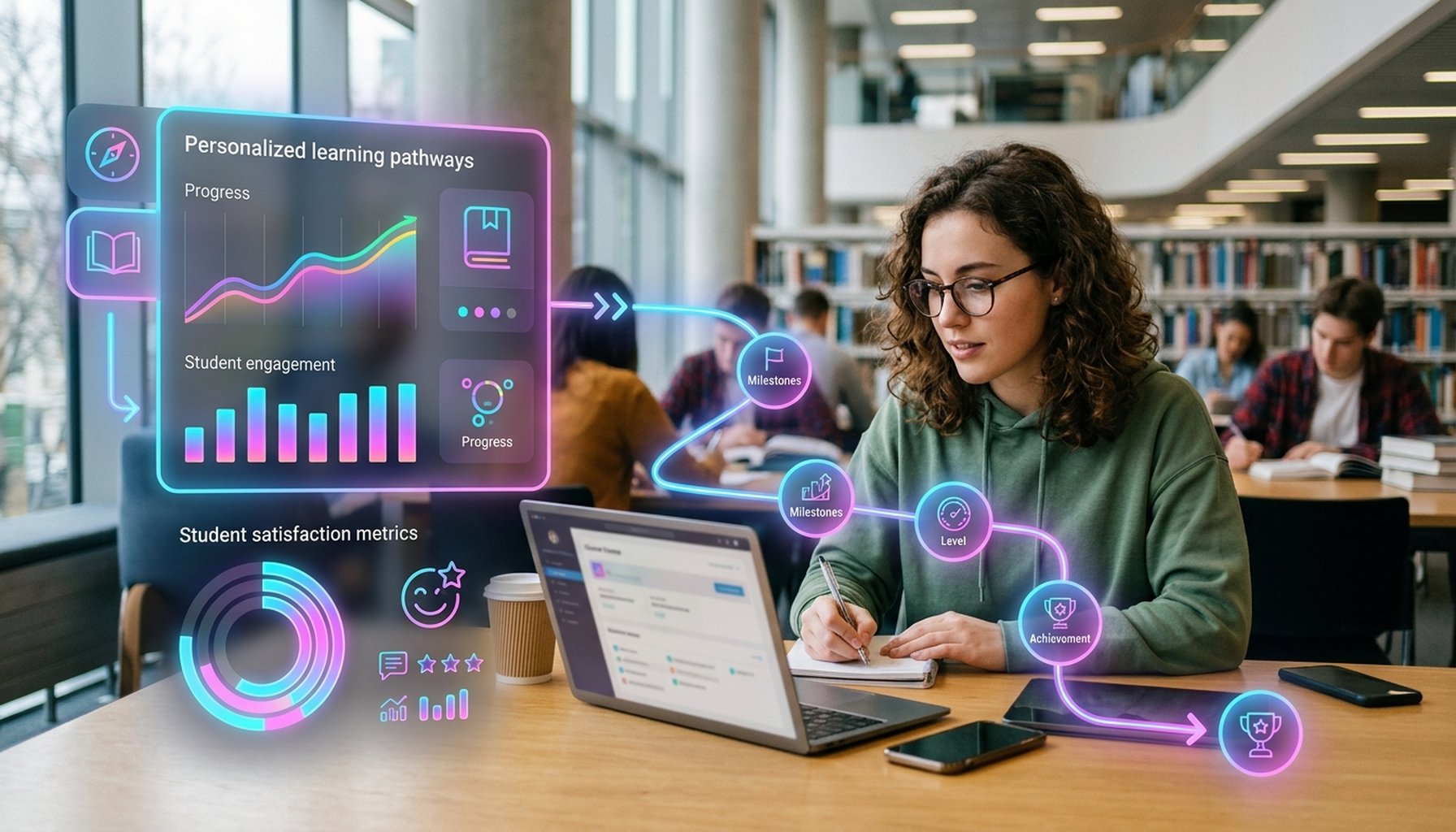
AI personalizes learning by continuously analyzing individual student performance data, adapting content difficulty in real-time, identifying knowledge gaps before they become critical, and providing educators with actionable insights for differentiated instruction. This shifts the paradigm from a rigid, batch-and-grade system to one of continuous assessment and adaptation. The goal is to meet each student exactly where they are.
AI in education creates individual learning paths through adaptive content delivery, pace adjustment, and accommodation for diverse learning styles. It also fosters interest-based engagement, making learning more relevant and captivating for students. This level of customization was previously unimaginable at scale.
For educators, AI acts as a powerful amplifier, handling repetitive tasks like grading, progress tracking, and resource curation. This frees teachers to focus on high-value activities such as mentoring, creative instruction, and building meaningful relationships with students. Concerns about “AI replacing teachers” are directly addressed here; AI serves as an indispensable tool, not a substitute, enhancing educator effectiveness.
Northwestern University’s Center for Advancing Safety of Machine Intelligence (CASMI) provides valuable academic perspectives on embracing AI for personalized learning, emphasizing its benefits and safety considerations. KnowledgeWorks also offers strategic insights on how artificial intelligence can optimize personalized learning and shape future learning models. When considering tailored personalization systems, our custom AI solutions can be invaluable.
How AI identifies and addresses knowledge gaps
AI provides continuous formative assessment through real-time understanding checks and pattern recognition in student responses. This constant monitoring allows for immediate identification of misconceptions or areas where students are struggling. The system can pinpoint specific knowledge gaps with remarkable precision.
Predictive analytics for at-risk identification use these patterns to flag struggling students early, often before they even realize they’re falling behind. This early warning system enables proactive intervention. Automated intervention recommendations can then suggest targeted resources, peer collaboration opportunities, or alert educators to specific needs.
Examples of specific AI in education tools like DreamBox Learning demonstrate how these systems work in practice, adapting math lessons based on student performance. Such platforms offer dynamic learning experiences that adjust to each student’s pace and comprehension. These AI solutions for student retention rates are vital.
Adaptive learning platforms: Features and benefits
Modern adaptive learning systems offer core capabilities that revolutionize the student experience. These include intelligent content sequencing, dynamic difficulty adjustment, and multi-modal delivery to cater to diverse learning preferences. Such platforms ensure learning is always engaging and appropriately challenging.
Crucially, these systems often integrate seamlessly with existing Learning Management Systems (LMS) and student information systems. This ensures a unified educational ecosystem and avoids data silos. This integration makes implementation smoother and more effective for an EdTech AI strategy.
Student experience improvements are significant, with reduced frustration, increased confidence, and better engagement being common outcomes. Educators benefit from comprehensive dashboards that provide insights into class-level trends, individual student progress, and the effectiveness of interventions. This makes AI personalized learning platforms powerful tools.
Empowering educators with AI-powered tools
AI in education dramatically empowers educators by automating a wide range of administrative tasks. These include grading objective assessments, managing attendance, generating progress reports, and facilitating parent communications. This frees up precious time for more impactful activities.
AI also provides significant instructional support. It can assist with lesson planning, curate relevant educational resources, and even suggest differentiation strategies for diverse learners. This allows teachers to focus on creative instruction and personalized student interaction.
Edutopia provides excellent insights on 7 AI tools that help teachers work more efficiently, showcasing practical applications.
The professional development opportunities arising from AI integration are also vast, including training in AI literacy, data-driven instruction, and personalized teaching strategies. Quantifying hours saved, teachers can reinvest approximately 5-10 hours per week into high-value mentoring and individualized student support. Virginia Tech researchers offer expert opinions on teacher training needs for AI integration, highlighting the importance of preparedness.
The student experience: Engagement and outcomes
The student experience is profoundly transformed by AI in education, primarily through increased engagement. Relevance and appropriate challenge levels, continuously adjusted by AI, keep students motivated and deeply involved in their learning. This tailored approach fosters a more active learning environment.
Improved learning outcomes are a direct result. Research published in PubMed Central offers scientific studies on the cognitive and psychological impacts of AI on learning, demonstrating how AI can enhance knowledge retention and understanding. Students gain a deeper grasp of subjects.
AI also fosters student agency and ownership by providing transparent learning paths, goal-setting support, and clear progress visibility. Additionally, AI-powered accommodations significantly enhance accessibility for diverse learning needs, ensuring equitable opportunities for all students. This makes personalized learning a reality.
Developing strategic AI roadmaps for future-proof EdTech ecosystems

A strategic AI roadmap for education requires five key phases: assessment and goal-setting, stakeholder alignment and change management, phased pilot implementation, scaling and integration, and continuous optimization with feedback loops. Ad-hoc AI adoption often fails; systematic planning is crucial for success. This structured approach is essential for any effective EdTech AI strategy.
Our strategic framework emphasizes why a comprehensive AI strategy development process is vital. This includes defining a clear vision and goals, conducting a current state assessment, performing a gap analysis, prioritizing initiatives, and meticulous implementation planning with defined success metrics. This ensures every step is intentional and aligned with institutional objectives.
Educational institutions face unique challenges in this process, including diverse stakeholder needs, academic calendar constraints, and complex budget cycles. Furthermore, regulatory compliance and data privacy are paramount considerations. The University of San Diego offers valuable insights on the transformative potential of AI in education and its implications for future learning models.
Emphasizing sustainability and scalability is critical when building AI capabilities that grow with the institution. This means designing systems that are flexible, adaptable, and capable of integrating new technologies as they emerge. For guidance on strategic planning, explore our AI consulting and strategy services.
When discussing comprehensive ecosystem integration, our enterprise AI development and integration solutions are highly relevant.
Phase 1: Assessment, vision, and goal-setting
The journey begins with a comprehensive current-state assessment. This involves a thorough technology audit, detailed process mapping, and in-depth stakeholder interviews across all departments. Understanding your current capabilities and pain points is foundational.
Next, you must define your AI vision: What does success truly look like for your specific institution in 2026? Setting SMART goals (Specific, Measurable, Achievable, Relevant, Time-bound) aligned with institutional strategic priorities is crucial. This provides a clear direction for your AI in education initiatives.
Identifying quick wins versus transformational opportunities helps in prioritizing initial efforts. Finally, building a compelling business case for leadership and board approval is essential to secure the necessary resources and buy-in. This phase sets the stage for a successful EdTech AI strategy.
Phase 2: Addressing adoption barriers and building readiness
Teacher preparedness is a significant barrier to AI in education adoption, requiring robust professional development programs. AI literacy training, peer learning communities, and hands-on workshops are essential to equip educators. Virginia Tech research highlights the importance of teacher training for AI integration, emphasizing practical classroom tools.
Infrastructure requirements are also critical, including sufficient network capacity, device availability, and seamless data system integration. Budget planning must consider the total cost of ownership, potential funding sources like grants, and a phased investment approach. These financial considerations are key to success.
Effective change management involves clear communication strategies, active stakeholder engagement, and proactive resistance management. Establishing ethical frameworks, including AI use policies, data privacy protocols, and bias mitigation strategies, builds trust and ensures responsible implementation. Addressing data privacy in AI in education is paramount.
Phase 3: Pilot implementation and learning
Selecting appropriate pilot projects is a crucial step in your AI in education roadmap. Criteria for choosing initial AI implementations should focus on manageable scope, clear objectives, and high potential for demonstrating tangible value. This approach minimizes risk and builds confidence.
Defining precise pilot success metrics and robust data collection methods are essential for evaluating outcomes. An iterative development approach—test, learn, adjust, scale—allows for continuous improvement based on real-world feedback. This agile methodology is highly effective.
Documenting lessons learned and best practices from these pilots provides valuable insights for future scaling. Critically, identifying and empowering internal champions and celebrating early success stories helps build momentum and widespread adoption. This phase is about proving the concept.
Phase 4: Scaling and ecosystem integration
Once pilot projects demonstrate success, the next phase involves establishing clear expansion criteria: when and how to scale these successful AI in education initiatives across the institution. This requires careful planning and resource allocation.
Technical integration is paramount, ensuring AI tools connect seamlessly with your existing EdTech ecosystem, including Learning Management Systems (LMS), Student Information Systems (SIS), and assessment platforms. This creates a unified and efficient environment. Data governance and interoperability standards are vital for this integration.
Vendor selection and management involve critical build-versus-buy decisions and thorough evaluation of potential partners. This ensures alignment with institutional goals. Establishing an organizational structure with dedicated AI leadership roles, support teams, and governance committees is key for long-term success of scalable AI systems for universities.
Phase 5: Continuous optimization and innovation
Continuous optimization is essential for maximizing the long-term value of AI in education. This involves establishing robust feedback loops that gather input from students, educators, and administrators regularly. Their insights are invaluable for refining AI tools and strategies.
Performance monitoring dashboards and regular review cycles allow institutions to track key metrics and adjust strategies as needed. Staying current with AI advancements through technology scanning, professional networks, and industry partnerships ensures your institution remains at the forefront of innovation.
Building a culture of innovation and continuous improvement fosters an environment where experimentation is encouraged and learning from failures is embraced. Finally, long-term sustainability planning, including funding, staffing, and technology refresh cycles, ensures your AI initiatives remain viable and impactful for the future of AI in education.
Ethical considerations and data privacy in AI-powered education

The integration of AI in education absolutely must treat ethics and data privacy as foundational, not as afterthoughts. These principles are non-negotiable for building trust and ensuring responsible technology deployment. Prioritizing them is key to successful AI adoption.
Key ethical considerations include the potential for algorithmic bias, the need for transparency in AI decision-making, ensuring student agency, promoting equity of access, and establishing appropriate use boundaries. These factors shape how AI interacts with and impacts students and educators. Addressing these concerns proactively is crucial.
Data privacy imperatives demand strict adherence to regulations like FERPA and GDPR, along with obtaining clear parental consent for data use. Principles of data minimization and robust security protocols are essential to protect sensitive student information. Northwestern University’s CASMI research offers academic perspectives on AI safety and ethics, reinforcing these critical points.
Developing institutional AI ethics policies, including governance structures, acceptable use guidelines, and regular review processes, provides a framework for responsible implementation. Building trust with all stakeholders through transparent communication about AI use, offering opt-out provisions, and conducting regular audits are vital. For assistance with ethics policy development, our AI consulting and strategy services can help.
Protecting student data and privacy
Protecting student data and privacy is paramount in AI in education. This necessitates strict adherence to regulatory compliance requirements such as FERPA, COPPA, and state-specific regulations, along with international considerations like GDPR. These legal frameworks provide crucial guidelines.
Implementing data minimization principles is key: collect only the data that is absolutely necessary, establish clear retention policies, and implement secure deletion procedures. Avoid unnecessary data sharing with third parties. Robust security measures, including encryption, access controls, and comprehensive breach response protocols, are non-negotiable.
Thorough vendor due diligence is critical when evaluating third-party AI providers. This includes scrutinizing their privacy practices, security certifications, and data usage agreements. Crucially, student and parent rights — including transparency, access, correction, and deletion of data — must be respected and upheld.
These measures are essential for addressing data privacy in AI in education concerns.
Ensuring algorithmic fairness and transparency
Ensuring algorithmic fairness and transparency is a non-negotiable ethical imperative in AI in education. This requires understanding and actively mitigating bias in AI systems, which can arise from unrepresentative training data or flawed algorithms. Regular algorithm auditing is essential to identify and correct these biases.
Transparency requirements include explainable AI, where the reasoning behind AI’s decisions is clear and understandable, and thorough documentation of decision-making processes. This builds trust and accountability. Equity considerations demand that AI benefits all students, not just a select few, and does not inadvertently widen existing achievement gaps.
Regular bias audits and robust correction mechanisms are necessary to maintain fairness over time. Furthermore, human oversight and clear intervention protocols ensure that AI systems remain accountable and responsive to nuanced educational contexts. These proactive steps are vital for ethical AI in schools.
Practical implementation: Getting started with AI in your institution

Embarking on your AI journey in education requires a practical, actionable plan. For education leaders, the “first 90 days” are crucial for building momentum and demonstrating early value. This initial period focuses on strategic planning, quick wins, and team building.
Identify quick-win opportunities that are low-risk but high-impact, such as deploying chatbots for student services or implementing AI-assisted scheduling. These early successes build confidence and secure further buy-in. For more on these types of solutions, explore our AI automation services.
Building your AI team involves assessing internal capabilities, identifying external partnership opportunities, and establishing advisory structures. Technology selection criteria should match solutions to specific institutional needs, emphasizing scalability and integration capabilities. Consider our industry-specific AI solutions designed for educational contexts.
Budget considerations require initial investment ranges, ongoing operational costs, and strategies for securing funding, such as grants or partnerships. Finally, defining clear success metrics and establishing continuous monitoring from day one ensures accountability and allows for agile adjustments. With our 18+ years of experience, we provide specific, tested recommendations for your AI in education implementation.
Quick-win AI projects to build momentum
For institutions looking to quickly demonstrate the value of AI in education, several quick-win projects offer high impact with relatively low risk. An AI-powered chatbot for student inquiries and support can be implemented within 4-8 months, offering 24/7 assistance and reducing administrative load. This typically has a moderate cost range with significant ROI in student satisfaction and staff efficiency.
For more on these, see our AI agents and chatbots services.
Automated administrative tasks, such as scheduling, attendance tracking, and basic reporting, can yield time savings within 3-6 months. These solutions typically involve low to moderate costs and free up staff for more critical tasks, enhancing overall operational efficiency. Explore our AI workflow automation solutions.
AI-assisted grading for objective assessments can also be a rapid win, delivering time savings and accuracy improvements within 3-5 months for a low to moderate investment. Intelligent content recommendation systems for students can boost engagement and learning outcomes, with measurable impact in 6-9 months. These projects provide tangible benefits and build momentum for broader AI in education initiatives.
Our customer service automation can also provide quick wins in student support.
Selecting the right AI partners and solutions
Choosing the right AI partners and solutions is critical for successful AI in education implementation. Institutions must first consider a build-versus-buy decision framework: when is it more advantageous to develop custom solutions versus adopting existing ones? This choice depends on unique institutional needs and resources.
Vendor evaluation criteria should include technical capabilities, proven education sector experience, robust integration support, transparent pricing models, and long-term viability. Thorough due diligence ensures you select partners who can truly meet your strategic objectives. This is where the value of working with experienced AI implementation partners becomes clear.
Konvergense has a proven track record with Fortune 500 companies and educational institutions, bringing 18+ years of digital transformation expertise to the table. We offer various partnership models, including consulting, implementation, managed services, and comprehensive training. Our custom AI solutions and enterprise AI development and integration services are designed to address complex institutional needs.
Building internal AI capabilities
Building internal AI capabilities is a strategic investment for any institution embracing AI in education. This involves identifying key roles such as an AI strategy leader, a technical implementation team, a change management lead, and educator champions. These roles drive the initiative forward.
Investing in professional development is crucial, whether through training existing staff or hiring specialized talent. This ensures your team has the skills to manage and leverage AI technologies effectively. Creating an AI governance committee, with broad representation and clearly defined responsibilities, establishes decision-making authority and oversight.
This is key for digital transformation leaders in EdTech.
Fostering an innovation culture encourages experimentation, embraces learning from failures, and celebrates successes. This supportive environment is essential for continuous improvement and adaptation. Teacher preparedness for AI integration is a core component of this strategy.
Frequently asked questions about AI in education

Q: Does the investment in AI actually pay off for educational institutions, and what does ROI look like beyond just financial savings?
DIRECT ANSWER: Yes, AI investment pays off when measured holistically—institutions typically see 25-40% reduction in administrative workload, 15-30% improvement in student retention, and 20-35% increase in operational efficiency within 12-18 months of implementation. The comprehensive ROI framework includes financial (cost reduction, revenue impact), operational (time savings, efficiency), learning (student outcomes, retention), and strategic (competitive position, innovation capability) dimensions. For example, a mid-sized university implementing AI-powered student support can see millions in annual savings from reduced attrition alone.
While quick wins like chatbots show returns in 3-6 months, transformational projects like personalized learning ecosystems require 12-24 months for full impact. Measurement tools and templates help track ROI across all four dimensions. EDUCAUSE Review provides excellent resources on establishing ROI for evaluating EdTech tools.
Q: How can institutions address vital barriers to AI adoption, such as teacher preparedness and ethical concerns?
DIRECT ANSWER: Address adoption barriers through comprehensive professional development programs, phased implementation with pilot projects, clear ethical guidelines and data privacy protocols, and active stakeholder engagement throughout the process. Teacher preparedness involves structured AI literacy training, peer learning communities, and hands-on experimentation. Virginia Tech research emphasizes effective teacher training approaches for AI integration.
Ethical framework development includes AI governance committees, acceptable use policies, and regular bias audits. Data privacy protocols like FERPA compliance, parental consent, and vendor due diligence are critical for ethical AI in schools. Effective change management communicates benefits clearly, addresses concerns honestly, and involves skeptics in pilot programs, transforming potential barriers into pathways for success.
Q: In what ways can AI effectively support and enhance the practice of personalized learning for teachers and students?
DIRECT ANSWER: AI personalizes learning by continuously analyzing individual student performance, adapting content difficulty in real-time, identifying knowledge gaps early, and providing educators with actionable insights for differentiated instruction—while freeing teacher time for high-value mentoring and creative teaching. Students benefit from adaptive learning paths, immediate feedback, and appropriate challenge levels that boost engagement and confidence. Educators are empowered through automated grading, progress tracking, and data-driven insights, often saving 5-10 hours per week on administrative tasks.
Edutopia highlights practical AI tools that help teachers. Northwestern University’s CASMI also explores the benefits of embracing AI for personalized learning, emphasizing AI’s role in identifying misconceptions before they become entrenched.
Q: What are the most important first steps for an educational institution beginning their AI journey in 2026?
DIRECT ANSWER: Start by conducting a comprehensive needs assessment, defining clear goals aligned with institutional priorities, identifying quick-win pilot projects, building stakeholder buy-in, and establishing an AI governance structure—all within the first 90 days. A needs assessment audits current technology, maps processes, and identifies pain points. Goal-setting defines SMART objectives and success metrics.
Quick-win selection focuses on low-risk, high-impact projects like an AI chatbot for student services or automated scheduling. Stakeholder engagement forms an AI task force and communicates the vision transparently. A governance structure establishes decision-making authority and ethical guidelines.
Finally, evaluate whether to build internally or partner with experienced implementers like Konvergense to ensure a solid EdTech AI strategy.
Q: How long does it typically take to see measurable results from AI implementation in education?
DIRECT ANSWER: Quick-win projects (chatbots, automated grading) show measurable results in 3-6 months, while comprehensive transformations (personalized learning ecosystems, predictive analytics) require 12-24 months to demonstrate full impact. For example, administrative automation often yields results within 3-6 months, while adaptive learning platforms might take 9-18 months. Factors affecting the timeline include institutional readiness, existing infrastructure, stakeholder engagement, and the quality of vendor support.
Early indicators of success include user adoption rates, time savings in specific processes, and student engagement metrics. Long-term success metrics encompass student retention improvements and learning outcome gains. New Mexico Highlands University’s AI case studies illustrate varied timelines based on project scope.
Q: Will AI replace teachers and education professionals?
DIRECT ANSWER: No, AI will not replace teachers—it will amplify their effectiveness by handling repetitive tasks, providing data-driven insights, and freeing time for high-value activities like mentoring, creative instruction, and relationship-building that only humans can provide. AI acts as a teaching assistant, excelling at tasks like grading objective assessments, progress tracking, and resource curation. However, complex instruction, emotional support, ethical guidance, and the nuanced relationships essential to student success remain the exclusive domain of human educators.
Virginia Tech perspectives confirm AI’s role in supporting, not replacing, teachers. Educator roles will evolve, focusing more on personalized support, curriculum design, and strategic intervention, while new roles in AI integration emerge.
Q: What are the most critical data privacy and security considerations when implementing AI in education?
DIRECT ANSWER: Critical considerations include FERPA compliance, obtaining proper parental consent, implementing data minimization principles, ensuring robust security measures (encryption, access controls), conducting thorough vendor due diligence, and establishing transparent data governance policies. Regulatory compliance extends to COPPA, state-specific privacy laws, and GDPR for international students. Data minimization means collecting only necessary data with strict retention and deletion policies.
Security measures include end-to-end encryption, role-based access, and regular audits. Vendor evaluation must assess third-party providers’ privacy practices and compliance. Transparency requires informing students and parents about AI use, providing clear privacy policies, and enabling data access requests.
These measures are foundational for addressing data privacy in AI in education concerns and building trust.
Q: How can smaller institutions with limited budgets implement AI effectively?
DIRECT ANSWER: Smaller institutions can implement AI cost-effectively by starting with free or low-cost tools, focusing on high-impact quick wins, leveraging cloud-based solutions with flexible pricing, pursuing grants and partnerships, and adopting phased implementation approaches. Begin with free AI tools like ChatGPT for educators or open-source platforms. Prioritize projects with the highest ROI and lowest complexity.
Cloud-based solutions offer subscription models that avoid large upfront investments and scale as needed. Explore education technology grants, public-private partnerships, and vendor pilot programs. A phased approach allows for incremental implementation, proving value before expanding, and gradually building internal expertise.
Partnering with experienced implementers like Konvergense can also offer flexible engagement models and shared cost structures for scalable AI systems.
Q: What metrics should institutions track to measure AI implementation success?
DIRECT ANSWER: Track four categories of metrics—financial (cost savings, revenue impact), operational (time efficiency, process improvements), learning (student outcomes, retention, engagement), and strategic (adoption rates, competitive position, innovation capability). Financial metrics include administrative cost reductions and student retention revenue. Operational metrics encompass administrative time saved and process cycle time reductions.
Learning metrics track student performance, engagement indicators, and completion rates. Student success metrics monitor retention, early identification of at-risk students, and graduation rates. Adoption metrics cover user adoption rates and satisfaction scores.
Strategic metrics assess competitive positioning and innovation capability. EDUCAUSE Review’s framework offers comprehensive measurement approaches for EdTech ROI, recommending executive dashboards for regular review.
Q: How can institutions ensure AI implementation supports equity and doesn’t widen achievement gaps?
DIRECT ANSWER: Ensure equity by conducting algorithmic bias audits, providing universal access to AI tools and devices, designing inclusive AI systems that accommodate diverse learning needs, monitoring disaggregated outcome data, and maintaining strong human oversight. Bias detection and mitigation involve regular algorithmic audits, diverse training data, and fairness metrics in AI models. Access equity means providing all students with necessary devices, connectivity, and free AI tools or subsidies.
Inclusive design ensures AI systems support multiple languages, learning styles, and accessibility features. Disaggregated data monitoring tracks outcomes by demographics to identify and address disparities. Human oversight ensures educator involvement in AI-assisted decisions, enables appeals, and provides opt-out options.
Northwestern University’s CASMI research also addresses ethical considerations for personalized learning, emphasizing the commitment to equity.
From chaos to clarity: Your next steps toward AI-powered education

The journey from the chaos of fragmented systems and overwhelming complexity to the clarity of AI-powered education is a transformative one. We’ve explored how strategic AI in education can deliver measurable ROI beyond just cost savings, enable personalized learning that empowers both students and educators, and provide robust implementation roadmaps for sustainable success. This strategic shift is not merely an option, but an imperative for educational leaders in 2026.
While AI transformation isn’t instant and requires commitment, the long-term benefits far outweigh the initial investment. Educational institutions that strategically embrace AI in 2026 will gain significant competitive advantages, future-proofing their learning environments and enhancing their impact. The urgency to act is now, to ensure your institution is not left behind in this digital revolution.
An effective EdTech AI strategy is key.
Konvergense is your ideal partner in this journey. With over 18 years of digital transformation experience and a proven track record with Fortune 500 companies, we bring unparalleled education-specific expertise to help you navigate this landscape. We are committed to ethical, transparent, and student-centered AI deployment, ensuring your transformation is both impactful and responsible.
Our services range from AI consulting and strategy to full enterprise AI development and integration.
Ready to transform your educational institution from chaos to clarity with strategic AI in education implementation? Schedule a consultation with Konvergense’s AI education experts to discuss your specific needs, challenges, and opportunities. With 18+ years of digital transformation experience and a proven track record with Fortune 500 companies, we’ll help you develop a customized AI roadmap that delivers measurable results. Contact us today to begin your journey toward a future-proof, AI-powered learning environment.
For those seeking more proof points, our AI case studies offer compelling insights into successful implementations.

Talk to Us
Ready to scale your business with a complete digital strategy?
Whether you’re looking to automate with next gen AI, amplify your digital marketing, engage audiences on social media, or build a powerful website – we have expert solutions for your business.
📩 DM us or email mail@konvergense.com for a FREE 30 minute strategy call.
Got questions? Chat on Whatsapp on our website.
Let’s make your business AI powered and future ready.
