


AI security for enterprises: A comprehensive guide for leaders and developers
The rapid ascent of Artificial Intelligence (AI) presents a transformative opportunity for enterprises across every sector. From automating complex processes to delivering hyper-personalized customer experiences, AI promises unprecedented innovation. Yet, this promise comes with an equally unprecedented set of security challenges. As AI systems become more integral to business operations, the need for robust AI security becomes paramount.
AI security is the holistic practice of protecting AI systems, data, and models from malicious attacks, vulnerabilities, and misuse throughout their entire lifecycle, ensuring reliable, ethical, and compliant operation within an enterprise. At Konvergense, our mission is to empower organizations to harness AI securely, transforming potential risks into strategic advantages. With over 10 years industry experience navigating complex tech landscapes, we understand the critical imperative for a proactive AI security strategy in 2025. This guide is designed for CEOs seeking to understand enterprise AI risk, developers building secure AI solutions, and cybersecurity experts crafting robust AI defense mechanisms.
In this comprehensive guide, you will gain actionable strategies for AI risk management, secure development practices, and robust defense against evolving AI attack vectors. We will equip you with the knowledge to establish effective AI governance and fortify your AI initiatives, ensuring they drive innovation securely and compliantly.
Conceptual image of a shield protecting a complex AI neural network or data flow, with ‘2026’ subtly integrated.
Enterprise AI Security By Numbers
Strategic AI risk mitigation and business impact assessment
For enterprise leaders, understanding AI security for CEOs extends beyond technical vulnerabilities; it’s about assessing the strategic impact on the business. Strategic AI risk mitigation requires a distinct approach compared to traditional IT risk management, recognizing the dynamic, learning-based nature of AI systems. Ignoring these unique characteristics can expose organizations to significant financial, reputational, and operational damage. Konvergense, with 10+ years industry experience in complex tech environments, has witnessed firsthand the importance of quantifying and mitigating these risks effectively.
The biggest AI risks for organizations encompass everything from data privacy breaches and algorithmic bias to model manipulation and intellectual property theft. Unlike static traditional IT systems, AI models can exhibit emergent behaviors and are vulnerable to novel threats that demand a specialized defense posture. For instance, in the GCC financial services sector, the strategic adoption of AI, while offering immense benefits, necessitates robust security from the outset to protect sensitive data and maintain customer trust, as explored in our insights on GCC financial services AI automation.
Infographic showing ‘Top 5 biggest AI risks for organizations’: Data breaches, model manipulation, regulatory non-compliance, reputational damage, operational disruption.
Quantifying and assessing AI risk across the enterprise
Identifying and categorizing AI-specific risks is the first step in building a resilient AI security posture management strategy. These risks go beyond typical cybersecurity concerns:
- Data Privacy: Protecting sensitive data used for training and inference from breaches and misuse.
- Algorithmic Bias: Ensuring models do not perpetuate or amplify biases, leading to discriminatory outcomes.
- Model Integrity: Defending against model manipulation AI (e.g., adversarial attacks) that can alter model behavior.
- Intellectual Property Theft: Safeguarding proprietary models, training data, and algorithms.
- AI System Vulnerabilities: Addressing weaknesses in AI frameworks, libraries, and infrastructure.
It’s crucial to translate these technical risks into tangible business impact, whether it’s financial loss from a data breach, reputational damage from biased outcomes, or operational downtime due to a compromised AI system. Developing an ‘AI Risk Register’ tailored for enterprise-wide visibility allows you to track, prioritize, and manage these risks proactively.
Aligning AI security strategy with business objectives
An effective AI security strategy isn’t an afterthought; it’s an integral component of your overall enterprise risk management framework. Gaining executive buy-in is essential, fostering a ‘security-first’ culture for all AI initiatives. This means educating leaders on the potential impacts and demonstrating how robust security enables, rather than hinders, innovation.
Proactive AI governance plays a pivotal role. By establishing clear policies, responsibilities, and oversight mechanisms, you can ensure that AI is developed and deployed securely and ethically, aligning with your overarching business objectives AI.
How AI risk management differs from traditional risk management
AI risk management requires a distinct paradigm shift from traditional risk management due to the unique characteristics of AI systems:
- Dynamic and Learning-Based: Unlike static, rule-based traditional IT systems, AI models continuously learn and evolve, making their behavior less predictable and their vulnerabilities potentially emergent.
- Opaque ‘Black Box’ Nature: Many advanced AI models operate as ‘black boxes,’ where the decision-making process is not easily interpretable, making it challenging to identify and debug issues or biases.
- Multi-Vector Attack Surface: AI introduces novel attack vectors like data poisoning, model inversion, and adversarial attacks that target the model’s logic, data, or training process, not just its code or infrastructure.
- Emergent Risks: AI systems can produce unexpected or unintended behaviors as they interact with real-world data, creating emergent risks that are difficult to anticipate during initial development.
Managing these emergent risks within complex AI governance frameworks demands continuous vigilance, specialized tools, and a deep understanding of AI’s intricate mechanics.

Integrating AI security across the entire development lifecycle
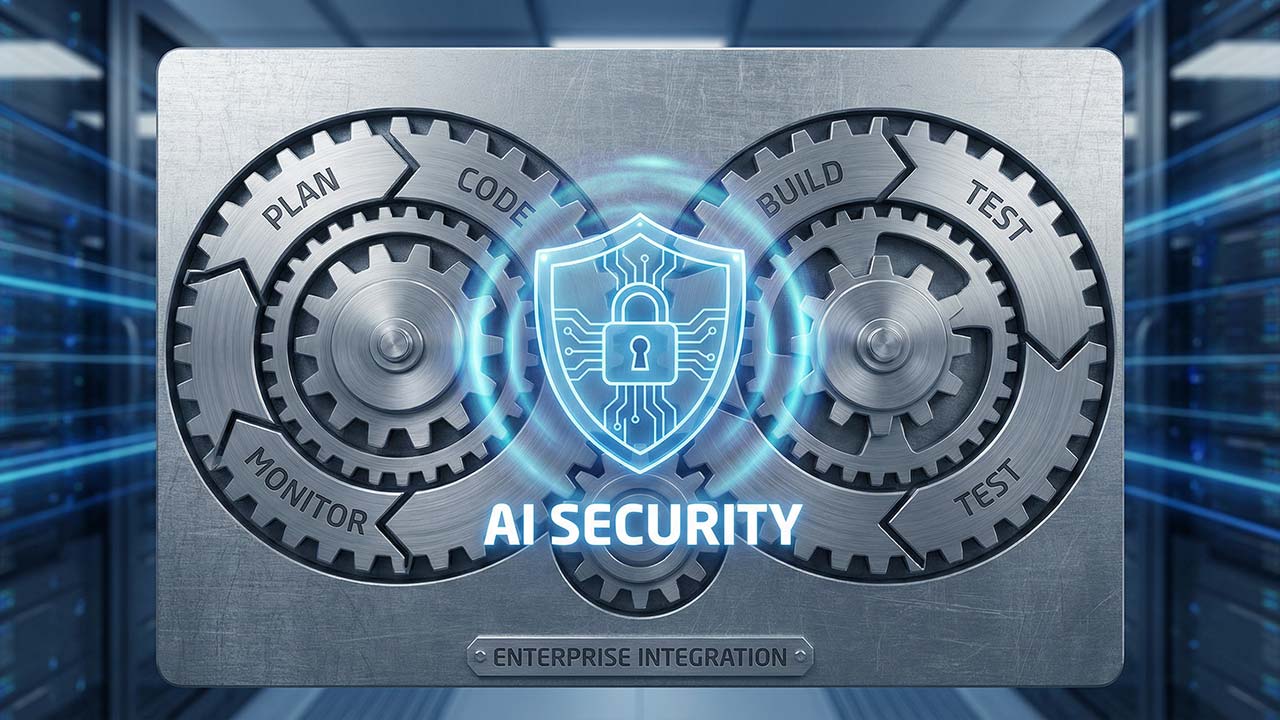
Securing AI effectively requires a fundamental shift from reactive security measures to ‘security by design.’ This means embedding integrating AI security lifecycle practices from the very inception of an AI project, rather than attempting to patch vulnerabilities post-deployment. This section guides developers and security architects through establishing secure MLOps practices and embedding security throughout the entire AI development and deployment lifecycle.
Konvergense has practical experience implementing secure MLOps for clients, understanding the challenges of integrating security into agile AI development pipelines. We emphasize that security is not a separate phase but a continuous consideration. According to Google Cloud, adopting a secure MLOps framework is critical for building trustworthy AI systems at scale.
Diagram showing ‘Secure MLOps pipeline’ with security checkpoints at each stage (data collection, model training, deployment, monitoring).
Secure MLOps practices and AI supply chain security
Implementing security from data ingestion and feature engineering to model deployment is paramount. This holistic approach ensures that every component of your AI system is protected:
- Data Ingestion Security: Validate and sanitize all incoming data, establish strict access controls, and encrypt sensitive information at rest and in transit.
- Feature Engineering: Ensure features are robust and free from bias, and that their creation process is secure from manipulation.
- Model Training and Development: Secure development environments, use trusted libraries and frameworks, and enforce code review processes.
- Model Deployment Security: Implement secure deployment pipelines, isolate model environments, and minimize attack surfaces.
Beyond the model itself, securing the entire AI supply chain security is crucial. This includes vetting third-party libraries, datasets, pre-trained models, and the underlying infrastructure. Best practices for version control and immutable infrastructure in AI development help ensure the integrity and traceability of all components, making it easier to roll back to a known secure state if necessary.
Model hardening techniques and pre-deployment security checks
To make AI models more resilient to attacks, employ model hardening techniques during development:
- Input Sanitization and Validation: Rigorously check and filter all data inputs to prevent malicious data from reaching the model.
- Robust Training: Use techniques like adversarial training (training the model on adversarial examples) to improve its resilience against future attacks.
- Feature Squeezing: Reduce the input space by converting diverse inputs into a small number of features, limiting the impact of small perturbations.
Before an AI model goes live, comprehensive pre-deployment security checks are essential. These include:
- Code Reviews: Manual and automated analysis of model code for vulnerabilities and adherence to secure coding standards.
- Vulnerability Scanning AI: Use specialized tools to identify known vulnerabilities in AI frameworks, libraries, and dependencies.
- Bias Detection: Analyze model outputs for unintended biases that could lead to unfair or discriminatory outcomes.
- Adversarial Testing: Simulate potential attacks to identify weaknesses in the model’s robustness.
During the ‘release’ phase of an AI model, key security checks involve verifying that all configurations are secure, access controls are properly enforced, and deployment artifacts are signed and validated to prevent tampering.
Continuous security monitoring and vulnerability management in production
Once deployed, the work of securing an AI system is far from over. Continuous AI monitoring is vital for detecting subtle changes that could indicate a compromise or emergent vulnerability:
- Model Drift Detection: Monitor for significant changes in model performance or behavior over time, which could indicate data poisoning or environmental shifts.
- Data Integrity Monitoring: Continuously verify the integrity of data pipelines feeding the model, detecting anomalies or unauthorized modifications.
- Anomalous Behavior Detection: Implement systems to flag unusual activity by the AI model itself or its interacting components.
Automated vulnerability management AI processes should be in place for deployed AI systems, integrating with existing security operations centers. This ensures rapid detection and response to new threats. Furthermore, enforcing strict AI access controls across all AI supply chain components and deployed models is critical. Implement least privilege principles, multi-factor authentication, and regular access reviews to prevent unauthorized access and potential misuse.
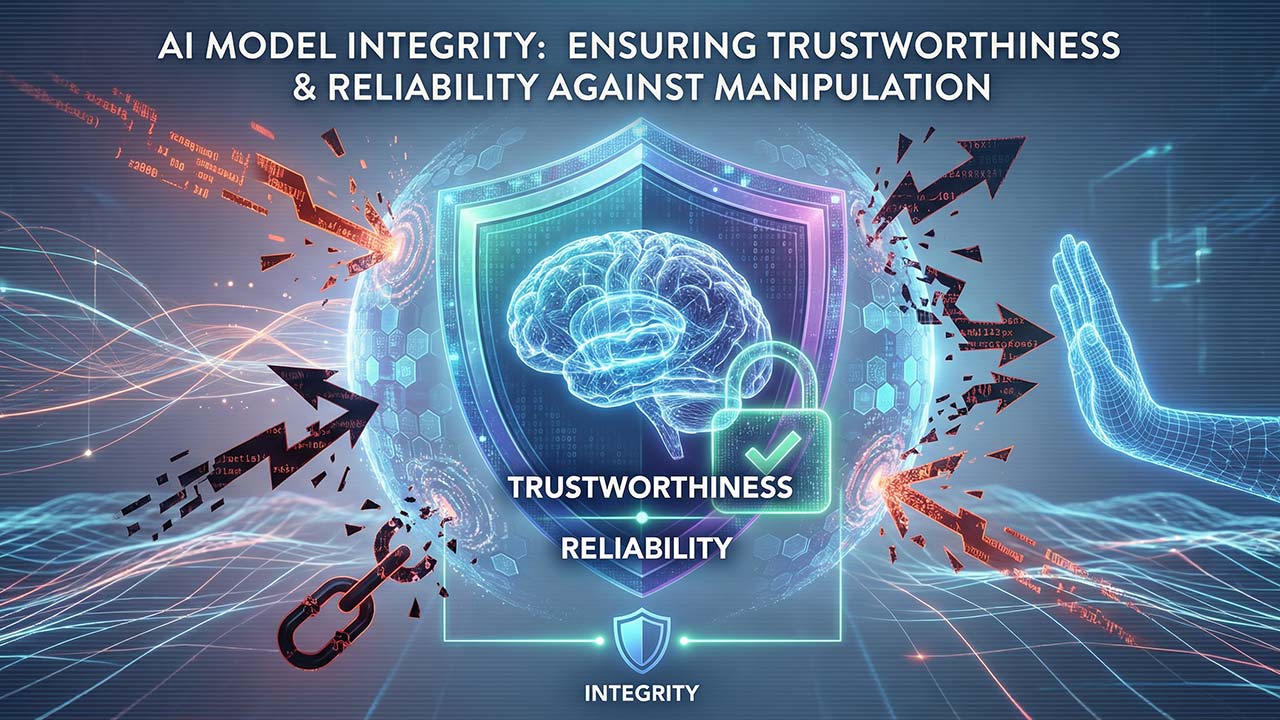
Understanding and defending against evolving AI attack vectors
The landscape of AI threats is constantly evolving, presenting unique challenges for cybersecurity experts and developers. Beyond traditional network and software vulnerabilities, AI systems face sophisticated and novel attack types. Konvergense, through our 10+ years industry experience and Konvergense AI Security Readiness Assessment, has identified and mitigated numerous specific AI attack vectors for clients, understanding the mechanics of these threats firsthand.
It’s not enough to know that these attacks exist; you need to understand how they work and, more importantly, how to defend against them. Organizations need to be prepared for everything from subtle data manipulations to the stealthy proliferation of unauthorized AI tools. According to industry reports from Gartner, advanced persistent threats targeting AI models are on the rise, underscoring the necessity of robust defense mechanisms.
Illustrations showing examples of adversarial attacks (e.g., a slightly altered stop sign image tricking an AI, a malicious prompt example).
Defense strategies against adversarial attacks
Adversarial AI attacks are designed to trick AI models by introducing subtle, often imperceptible, perturbations to data. Key types include:
- Prompt Injection: Manipulating inputs (prompts) to large language models (LLMs) to override safety guidelines or extract sensitive information.
- Data Poisoning: Injecting malicious data into the training set to subtly corrupt the model’s learning process, leading to biased or incorrect future outputs.
- Model Evasion: Crafting inputs that are subtly altered to be misclassified by a deployed model, allowing malicious actors to bypass detection (e.g., tricking a spam filter).
To protect AI models from these sophisticated threats, implement a multi-layered defense:
- Adversarial Training: Augment your training data with adversarial examples to make your model more resilient to such attacks.
- Input Validation and Sanitization: Rigorously filter and validate all inputs, especially for LLMs, to detect and neutralize malicious prompts.
- Feature Squeezing: Reduce the precision of input features to make subtle adversarial perturbations less effective.
- Defensive Distillation: Train a new model on the softened outputs (probabilities) of an existing model, which can improve robustness.
Establishing adversarial testing AI programs, where ethical hackers actively attempt to compromise your AI models, is crucial for proactively identifying and patching vulnerabilities before real-world attacks. This iterative process strengthens your defenses over time.
Mitigating shadow AI tools and over-permissive fine-tuned models
The rise of user-friendly AI tools has led to a phenomenon known as ‘Shadow AI’—the use of unauthorized or unmanaged AI applications within an organization. This creates significant risks for data leakage, compliance violations, and intellectual property exposure. To implement Shadow AI defense:
- Gain Visibility: Utilize network monitoring and endpoint detection tools to identify unauthorized AI tool usage.
- Establish Clear Policies: Develop and communicate clear policies regarding the acceptable use of AI tools and data within the enterprise.
- Provide Secure Alternatives: Offer employees secure, approved AI solutions that meet their needs, reducing the incentive for shadow IT.
- Employee Training: Educate employees on the risks associated with unauthorized AI tools and the importance of adhering to AI governance policies.
Additionally, fine-tuned models security is a growing concern. When employees fine-tune publicly available models with internal data, it can lead to data leakage or models that are over-permissive and exploitable. Strategies for managing and securing these models include centralized oversight, strict access controls to fine-tuning environments, and auditing the outputs of fine-tuned models for sensitive information.
Protecting against unauthorized access by AI agents or APIs
As AI agents and services become more interconnected, securing their interactions and API access is critical. Implement zero trust AI principles, assuming that no user, device, or AI agent should be automatically trusted, regardless of whether it’s inside or outside the network perimeter.
- Authentication and Authorization: Implement robust authentication and authorization mechanisms for all AI agent interactions and API calls. This includes strong identity verification for AI services themselves.
- API Security: Treat AI APIs with the same rigor as any other critical enterprise API, employing rate limiting, input validation, and continuous monitoring for suspicious access patterns.
- Continuous Monitoring: Actively monitor data flows and AI entity behavior for unauthorized access or anomalous activity by AI agents. This can help detect if an AI agent has been compromised or is behaving outside its intended parameters.
By applying these rigorous security measures, you can prevent malicious actors from exploiting AI agents or APIs to gain unauthorized access to data or control over critical systems.
Frequently asked questions
Q: How can adversarial attacks compromise enterprise AI models?
Adversarial attacks compromise enterprise AI models by introducing subtle, malicious perturbations to input data (evasion attacks), injecting bad data during training (data poisoning), or manipulating prompts in large language models (prompt injection). These attacks can cause models to misclassify data, generate incorrect outputs, leak sensitive information, or behave unexpectedly, leading to financial losses, reputational damage, and operational failures. Examples include tricking autonomous vehicles into misidentifying objects or causing fraud detection systems to overlook illicit transactions, which has been a topic of extensive research in the Journal of Scientific and Academic Research (JSAER).
Q: How to defend against shadow AI tools?
To defend against Shadow AI tools, organizations must first establish clear visibility into all AI tools and services used within the enterprise, authorized or not. Implement robust AI governance policies, conduct regular audits of AI tool usage, and provide secure, approved AI solutions to employees. Utilize network monitoring and data loss prevention (DLP) tools to detect unauthorized AI tool access or data transfers, and educate employees on the risks and proper use of AI. Konvergense’s 10+ years industry experience has shown that a combination of technology and clear policy is key to managing internal tool usage effectively.
Q: What are the biggest AI risks for organizations?
The biggest AI risks for organizations include data privacy breaches, algorithmic bias leading to discriminatory outcomes, model manipulation AI (e.g., adversarial attacks), intellectual property theft of proprietary models, and regulatory non-compliance. Operational risks such as AI system vulnerabilities, unreliable model performance, and integration complexities also pose significant threats. These risks can lead to financial losses, reputational damage, legal liabilities, and erosion of customer trust, as highlighted by reports from the IBM Institute for Business Value and Gartner.
Q: How does AI risk management differ from traditional risk management?
AI risk management differs from traditional risk management primarily due to the unique characteristics of AI systems, which are dynamic, learning-based, often opaque (‘black box’), and possess an evolving multi-vector attack surface. Unlike static traditional IT systems, AI models can exhibit emergent behaviors, adapt to new data, and are vulnerable to novel threats like adversarial attacks, requiring continuous monitoring and specialized mitigation strategies. Traditional risk frameworks often lack the mechanisms to address algorithmic bias, model drift, and the ethical implications inherent in AI decision-making.
Q: How can organizations protect AI models from adversarial machine learning attacks?
Organizations can protect AI models from adversarial machine learning attacks by implementing robust model hardening techniques, such as adversarial training, input sanitization, and feature squeezing, to make models more resilient. Establishing continuous AI monitoring for model drift and anomalous inputs in production is crucial, alongside enforcing strict access controls and securing the entire AI supply chain. Proactively conducting adversarial testing AI programs, where ethical hackers attempt to compromise models, helps identify and patch vulnerabilities before real-world attacks. Konvergense leverages its 10+ years industry experience to guide clients through implementing these complex defense mechanisms.
Summary: Securing your AI future with Konvergense
Navigating the complex landscape of AI security requires a strategic, holistic, and proactive approach. We’ve explored the critical themes of AI risk management framework, integrating security throughout the AI development lifecycle, and defending against a new generation of evolving threats. From understanding the unique challenges of AI risk to implementing secure MLOps practices, continuous monitoring, and robust defenses against adversarial attacks and Shadow AI, securing your AI future is paramount for continued innovation and compliance.
Konvergense, with our 10+ years industry experience in digital transformation and AI, stands as your trusted partner in navigating these complexities. We empower organizations to build a strong AI security posture management, leveraging principles like zero trust AI and emphasizing continuous AI monitoring and granular AI access controls. Our expertise ensures your AI initiatives are not only innovative but also resilient and trustworthy.
Ready to fortify your enterprise’s AI defenses? Download Konvergense’s ‘AI Security Implementation Guide’ for practical steps and a comprehensive readiness checklist. Partner with us to build a secure and innovative AI future.
Konvergense logo with a tagline like ‘Secure AI innovation partner’.
Talk to us
Ready to scale your business with a complete digital strategy?
Whether you’re looking to automate with next gen AI, amplify your digital marketing, engage audiences on social media, or build a powerful website – we have expert solutions for your business.
📩 DM us or email mail@konvergense.com for a FREE 30 minute strategy call.
Got questions? Chat on Whatsapp on our website.
Let’s make your business AI powered and future ready.
